
Vertical Ascent Rate Calculator2026-09-29T23:03:41+01:00

FREE VAM CALCULATOR

Vertical Ascent Rate Calculator

Measure your climbing speed. Track progress. Go further. 

Vertical Ascent Rate (VAM) estimates your vertical climbing speed in meters per hour and helps hikers, mountaineers, cyclists and endurance athletes assess and improve their uphill performance.

A Climbing Metric That Actually Matters

VAM is more than just a number — It’s a powerful way to understand your uphill performance, compare efforts and track progress in the mountains.

COMPARE CLIMBS

See how different routes

and mountains stack up.

TRACK PROGRESS

Measure improvement

over time.

PACE EFFORTS

Plan and pace your climbs

more effectively.

UNDERSTAND GRADIENT

See how slope and terrain

effect your performance.

PLAN TRAINING

Use real data to build

stronger, more specific

mountain training.

Vertical Ascent Rate Calculator

Simple Data. Powerful Insights.
m
Total vertical ascent
h
min
Total moving time
km
Total climb distance (optional)
m
Start elevation (optional)
m
End elevation (optional)
Choose your units

Your Results

Every Climb Tells a Story
Vertical Ascent Rate
850 m/h
Average Climbing Speed
Elevation Gain
1,275 m
Total Ascent
Moving Time
1 h 30 min
Total Time
Distance
6.8 km
Total Distance
Avg Gradient
18.8%
Average Slope
Start Elevation
2,400 m
End Elevation
3,675 m
Standard VAM
850 m/h
Vertical per Minute
14.2 m/min
Your Vertical Ascent Rate
850 m/h
0 300 600 1,000 1,500+ m/h
VAM is calculated from vertical elevation gain divided by moving time. Average gradient is estimated as elevation gain ÷ entered route distance × 100, so it is most useful for predominantly uphill routes. Terrain, altitude, surface, weather and gradient can substantially affect VAM and should be considered when comparing different climbs.

WHY USE VAM?

More than just a number

VAM helps you monitor effort, compare routes and make smart training decisions. Whether you are hiking, mountaineering, cycling or simply love the mountains. VAM gives you a clear measure of your uphill performance.

✓ Understand and compare your effort

✓ Track progress over time

✓ Identify strengths and areas to improve

✓ Use real data to guide your training

✓ Perform better and enjoy the mountains more

STRONGER

HILLS

BRIGHTER

TOMORROWS

WHO IS VAM FOR?

VAM is a valuable metric for anyone who spends time going uphill.

HIKERS

Understand your effort and take on bigger adventures.

MOUNTAINEERS

Assess performance on big days in the mountains.

CYCLISTS

Track your climbing speed and compare routes.

ENDURANCE ATHLETES

Use VAM to build strength, stamina and resilience.

OUR PROCESS

Simple. Effective. Insightful.

STEP 1

ENTER YOUR CLIMB DATA

Add your elevation gain, time, distance and other details.

STEP 2

CALCULATE YOUR VAM

Get instant results with key metrics and visual breakdowns.

STEP 3

COMPARE & IMPROVE

Use your results to compare climbs and track your progress over time.

PERFORMANCE WITH PURPOSE

Why VAM Matters?

Climbing performance is a key indicator of overall fitness, strength and endurance. VAM gives you a simple, reliable way to measure it.

✓ A clear measure of uphill performance

✓ Helps you set realistic goals

✓ Useful for all mountain activities

✓ Encourages consistent progress

✓ Turns your adventures into measurable achievements

FREQUENTLY ASKED QUESTIONS

Is a higher VAM always better?2026-09-17T22:59:22+01:00

Not necessarily. A higher VAM generally indicates a faster rate of climbing, but VAM is heavily influenced by the route, gradient, terrain, altitude, weather conditions and how technical the climb is.

A steep, smooth road may produce a much higher VAM than a rocky mountain trail even if the athlete is working equally hard.

For this reason, VAM is most useful when comparing similar climbs, routes or repeated efforts under comparable conditions.

How is VAM calculated?2026-09-17T22:58:22+01:00

VAM is calculated using your total vertical elevation gain and the time taken to complete that ascent.

The basic formula is:

VAM = Vertical Elevation Gain ÷ Time in Hours

For example, if you climb 1,200 metres in 90 minutes:

1,200 ÷ 1.5 = 800 m/h

The calculator performs this calculation automatically once you enter your elevation gain and moving time.

What is VAM and what does it measure?2026-09-17T22:58:42+01:00

VAM stands for Vertical Ascent in Metres per Hour. It measures how quickly you gain elevation while climbing.

For example, if you climb 800 vertical metres in one hour, your VAM is:

800 m/h

VAM is useful for hikers, mountaineers, cyclists, trail runners and other endurance athletes because it provides a simple way to quantify uphill performance.

Should I use total time or moving time when calculating VAM?2026-09-18T03:34:08+01:00

For most performance comparisons, moving time is preferable because it reflects the time you were actually climbing rather than including long stops or breaks.

If you are comparing the same route across multiple attempts, try to use the same timing method each time.

For activities where rest periods are part of the challenge—such as some mountaineering efforts—you may also want to record total elapsed time separately. This gives you both a pure climbing-performance metric and a measure of your overall expedition pace.

Can cyclists use VAM?2026-09-17T23:00:40+01:00

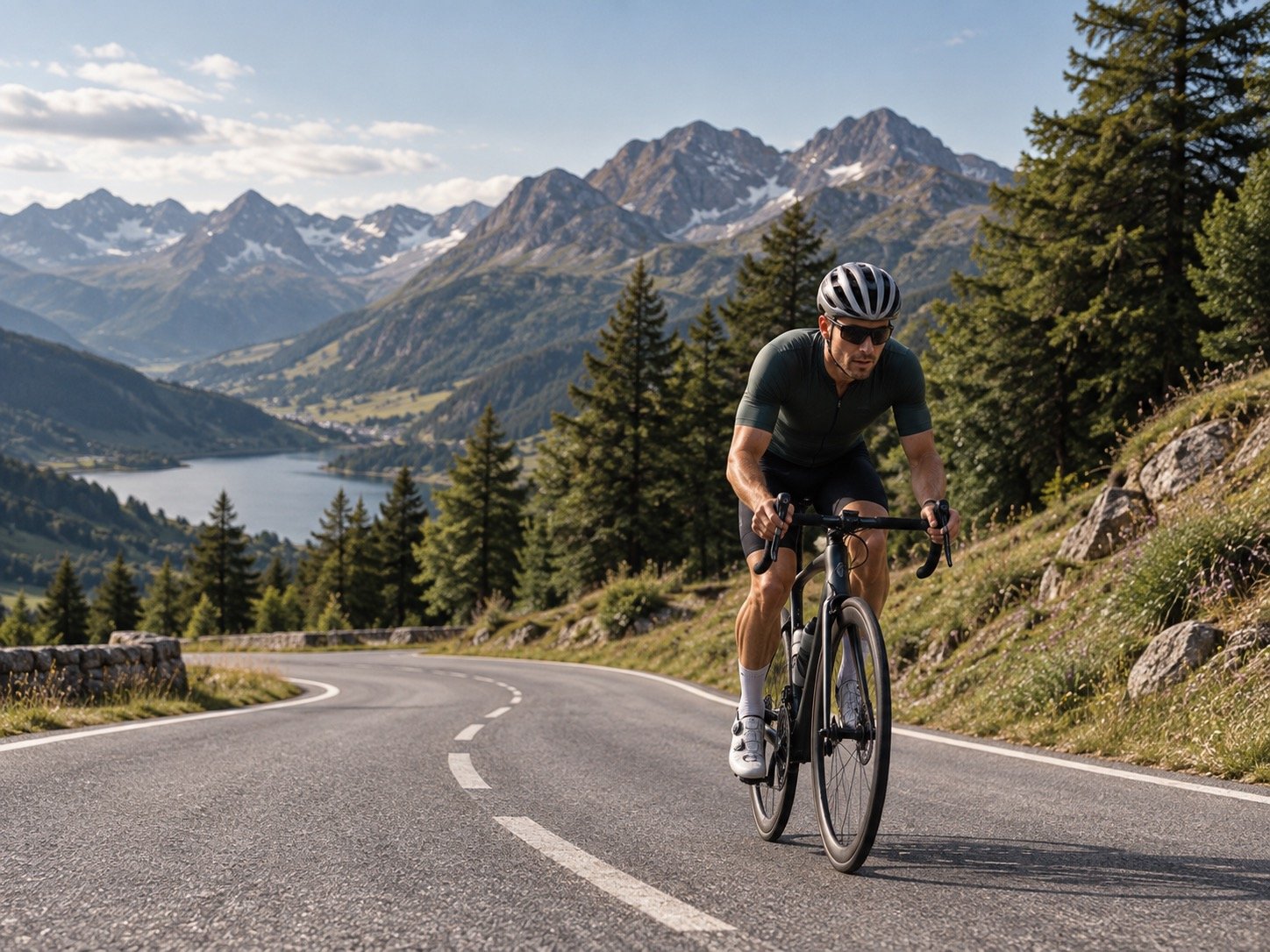
Yes. VAM is widely useful in cycling, particularly for sustained climbs where elevation gain can be compared against climbing time.

For example, if a cyclist gains 900 vertical metres during a one-hour climb, their VAM is approximately:

900 m/h

However, cycling VAM should be interpreted alongside factors such as gradient, power output, body mass, wind, road surface and altitude, since these can significantly affect climbing speed.

What is considered a good VAM?2026-09-17T23:00:05+01:00

There is no single VAM value that defines good climbing performance for everyone.

A recreational hiker may record a few hundred vertical metres per hour, while trained mountain athletes or cyclists can sustain substantially higher ascent rates.

Your best benchmark is usually your own previous performance. Tracking VAM over time can help you identify whether your climbing speed and uphill fitness are improving.

Train Smarter For The Mountains

Use real data. Build real progress. Go further.

Go to Top