
PLAN HIGH. GO FURTHER
Altitude Acclimatization Planner
plan your sleeping altitude. Build in acclimatization days.
Prepare for higher mountains.
Create a personalised night by night ascent strategy based on proven guidelines to help you acclimatise safely, perform better at altitude and reach your goals in the mountains.

Altitude Acclimatization Planner
Build a progressive sleeping-altitude strategy before a high-altitude trek, race, climb or expedition.
Ascend Smarter.
Your Acclimatization Strategy
Sleeping Altitude Drives the PlanSuggested Sleeping-Altitude Progression
Do not ascend to sleep higher if altitude-illness symptoms are present. If symptoms worsen despite remaining at the same elevation, descent is indicated. Confusion, loss of coordination, severe breathlessness at rest, or rapidly worsening respiratory symptoms require urgent action and medical assessment.
What is Altitude Acclimatization?
Altitude ascclimatization is your bodies natural process of adapting to lower oxygen levels at higher elevations. it takes time, and a gradual ascent gives your body the chance to adjust — helping you stay healthier, perform better and enjoy your time in the mountains.
OXYGEN ADJUSTMENT
Your body increases red
blood cells and improves
oxygen delivery.
SAFE ASCENTS
Reduces the risk of
altitude illness
(AMS, HACE, HAPE).
IMPROVED PERFORMANCE
Helps you feel stronger
for bigger days
in the mountains.
BETTER SLEEP
Supports higher quality
rest at altitude.
SMARTER PLANNING
A structured approach
helps you reach your goals
safely and confidently.
SIMPLE STEPS. BIGGER JOURNEYS.
How The Planner Works.
Create your personalised altitude plan in three simples steps.

STEP 1
ENTER YOUR TRIP
Add your current altitude, target altitude, nights available and other details.
STEP 2
BUILD THE ASCENT
Our tool generates a personalised night by night plan using proven guidelines.
STEP 3
REVIEW YOUR PLAN
See your full itinerary, key insights and safety guidance — then get ready to go higher.
PLAN SMARTER
How quickly should you increase sleeping altitude?
A gradual ascent gives your body time to adapt to lower oxygen levels, reducing the risk of altitude illness and helping you perform better.
✓ Spend time at 2500 – 2700m to start acclimatizing.
✓ Above 3000m, increase sleeping altitude by 300 – 500m per night.
✓ Take a rest day every 3 – 4 days, or roughly every 1000m of gain.
✓ Adjust based on how you feel — go slower if needed.

THE BIGGER PICTURE
Why Sleeping Altitude Matters More Than Your Highest Point
Your body adapts during rest, not at the top. It’s your sleeping altitude — the altitude you spend the night at — that drives acclimatization, not your highest point of the day.
KEY CONSIDERATIONS
What Affects How Quickly You Acclimatize?
Everyone responds differently to altitude. These key factors influence how quickly you adapt.
BUILD ON PAST EXPERIENCE
Recent Altitude Exposure & Pre-Acclimatization
If you’ve been at altitude in the days or weeks before your trip, your body may already be partly acclimatized, which can help you adapt more quickly. However, the benefits are temporary and typically fade within days to weeks, so they shouldn’t replace a gradual ascent plan.
HOW LONG THE BENEFITS LAST
Days to weeks
Most of the benefits typically last from a few days to a few weeks.
Not permanent
Acclimatization decreases when you return to low altitude and is not maintained long term.
Still follow guidelines
Previous exposure can help, but you should still follow standard altitude acclimatization guidelines for your new trip.
YOUR SAFETY COMES FIRST
Recognising When You Should Stop Ascending
Altitude illness can affect anyone. Knowing the signs and responding early helps keep you safe and ensures you can continue your journey another day.
KEY SAFETY GUIDELINES
Do not ascend with symptoms
If you have symptoms of altitude sickness, do not go higher.
Rest if symptoms occur
Stop ascending, rest, hydrate and monitor your symptoms.
Descend if symptoms worsen
If symptoms persist or get worse, descend to a lower altitude. This is the safest and most effective treatment.
Who Is The Planner For?
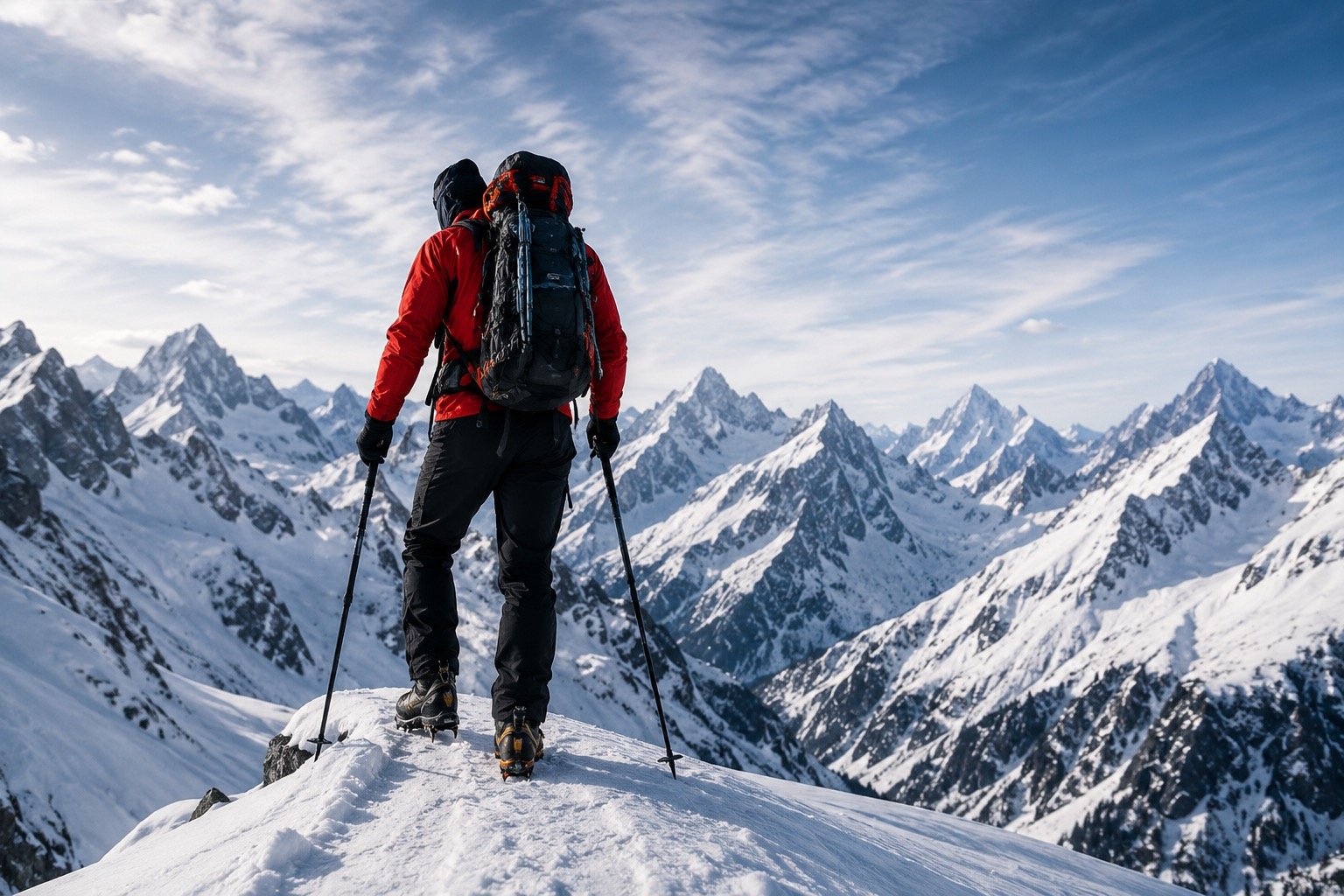
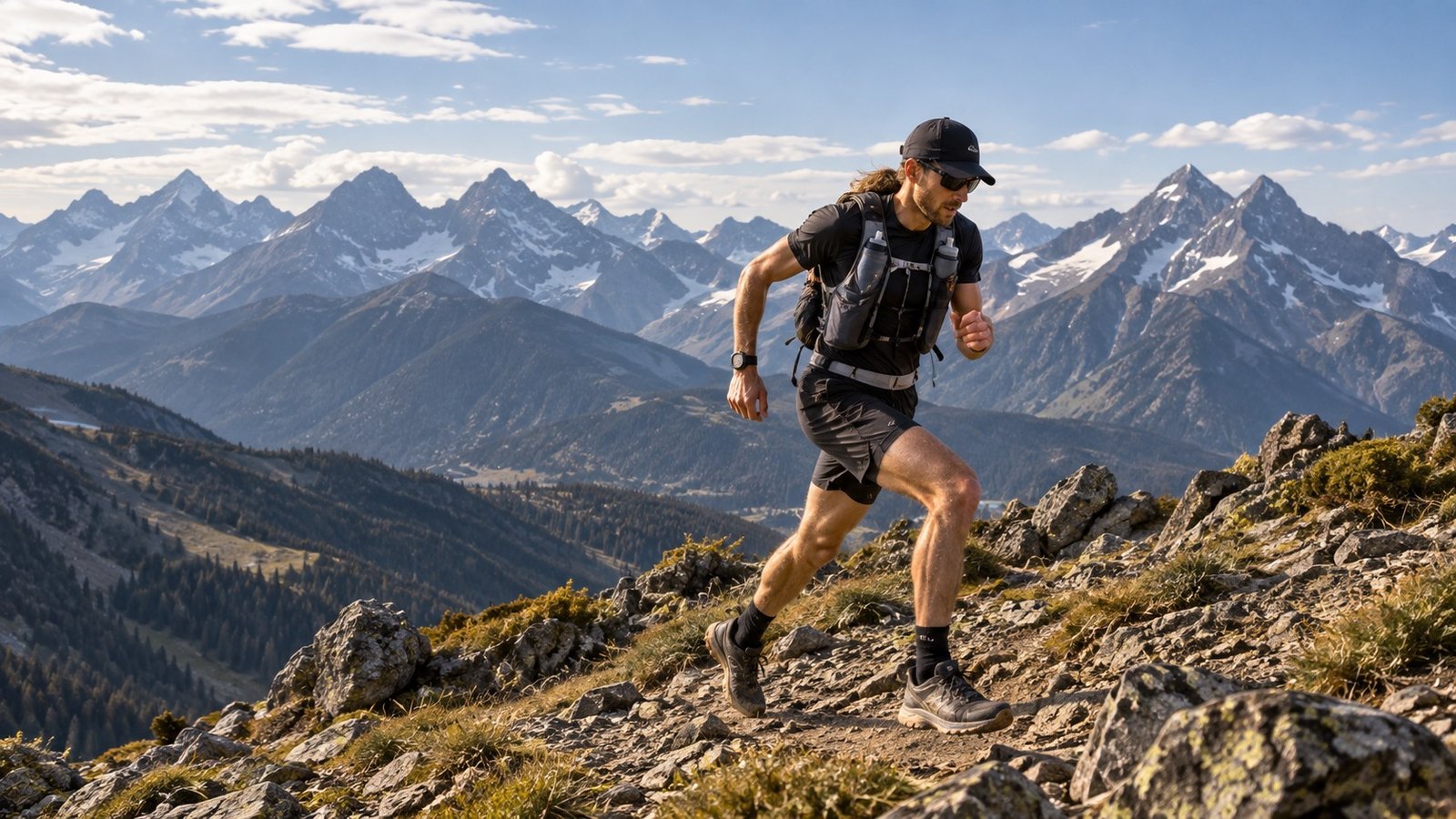
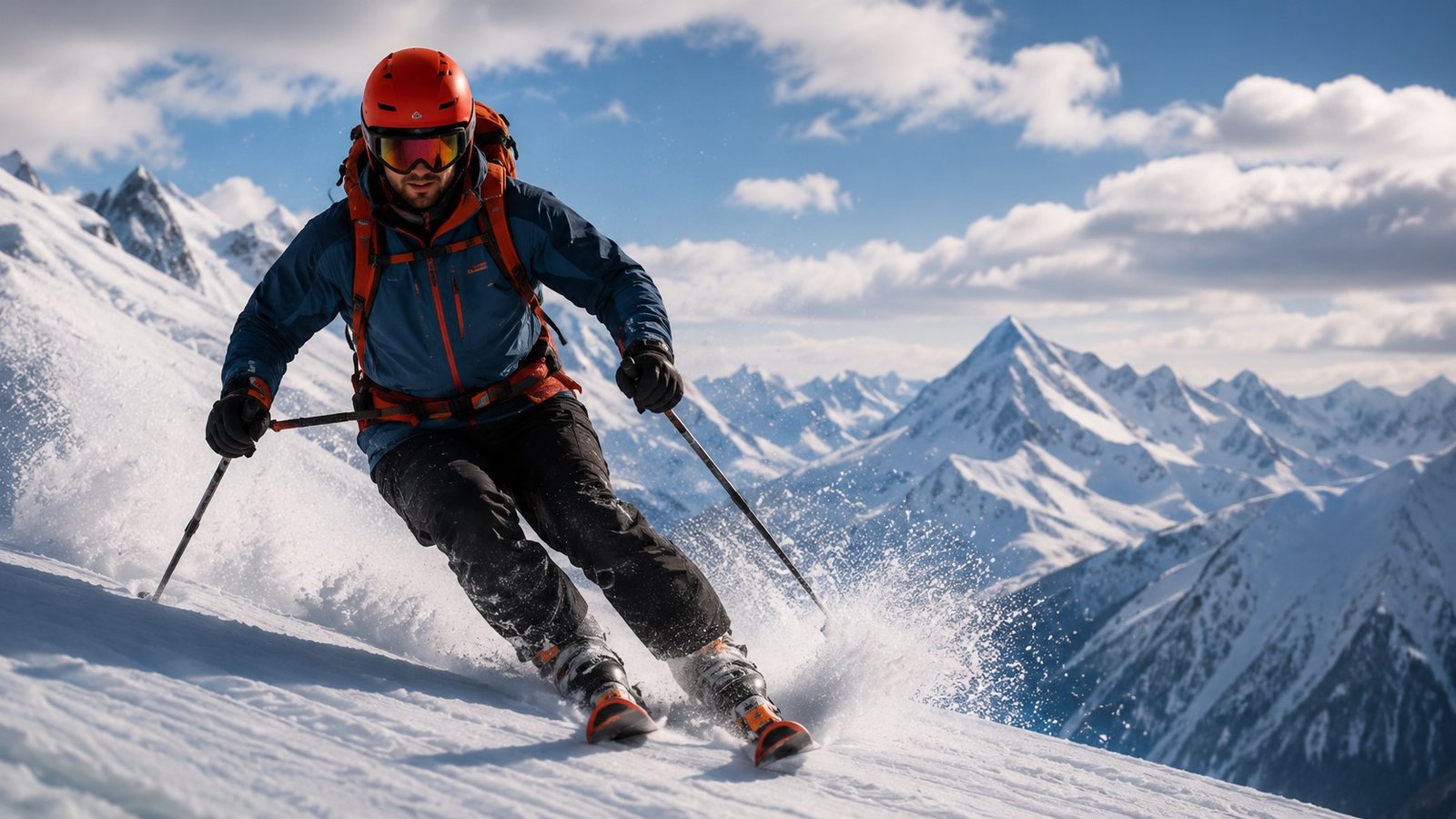
Our altitude acclimatization planner helps anyone heading to higher places perform better, stay safer and get more from their time in the mountains
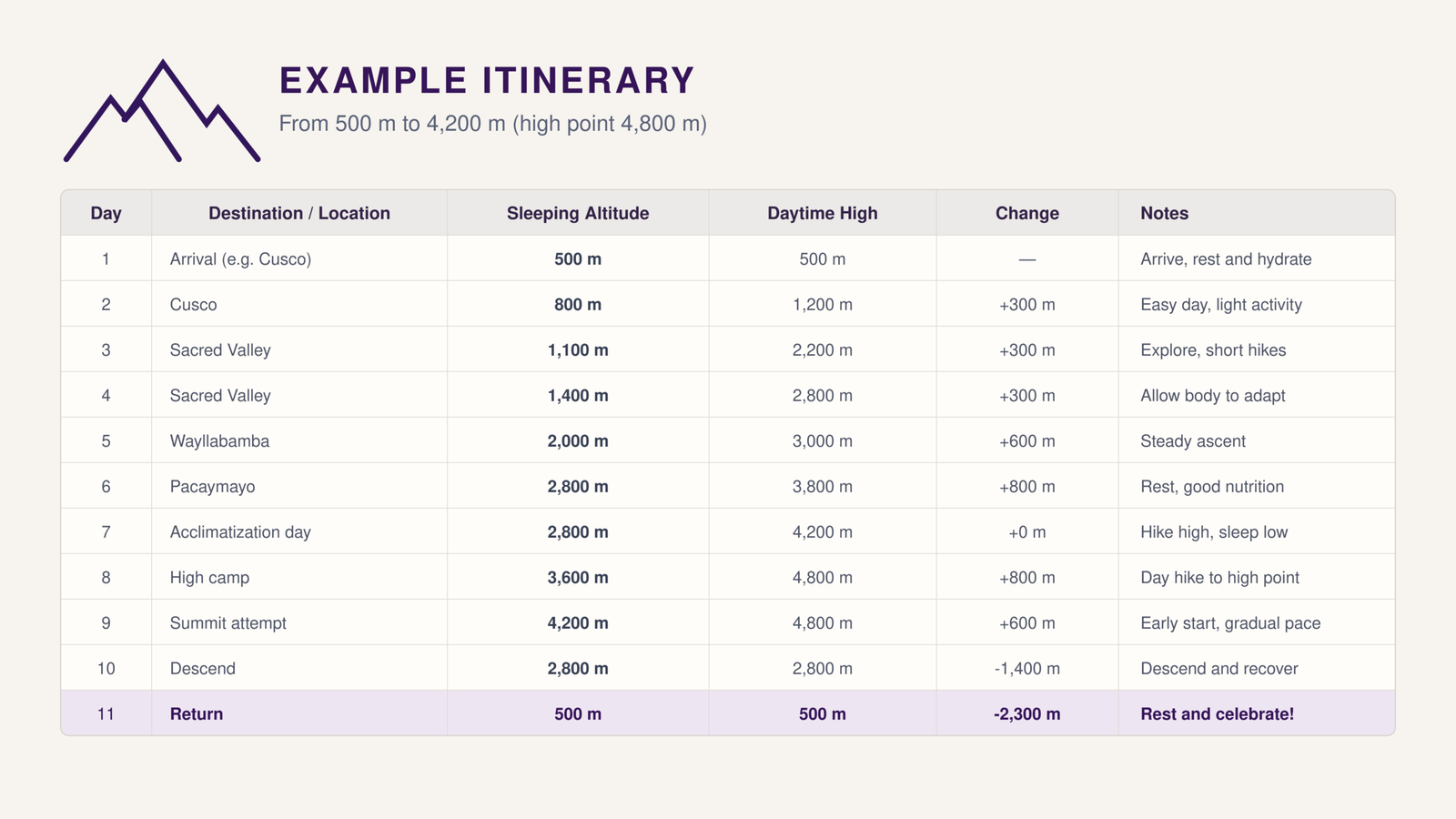
Example Acclimatization Plan
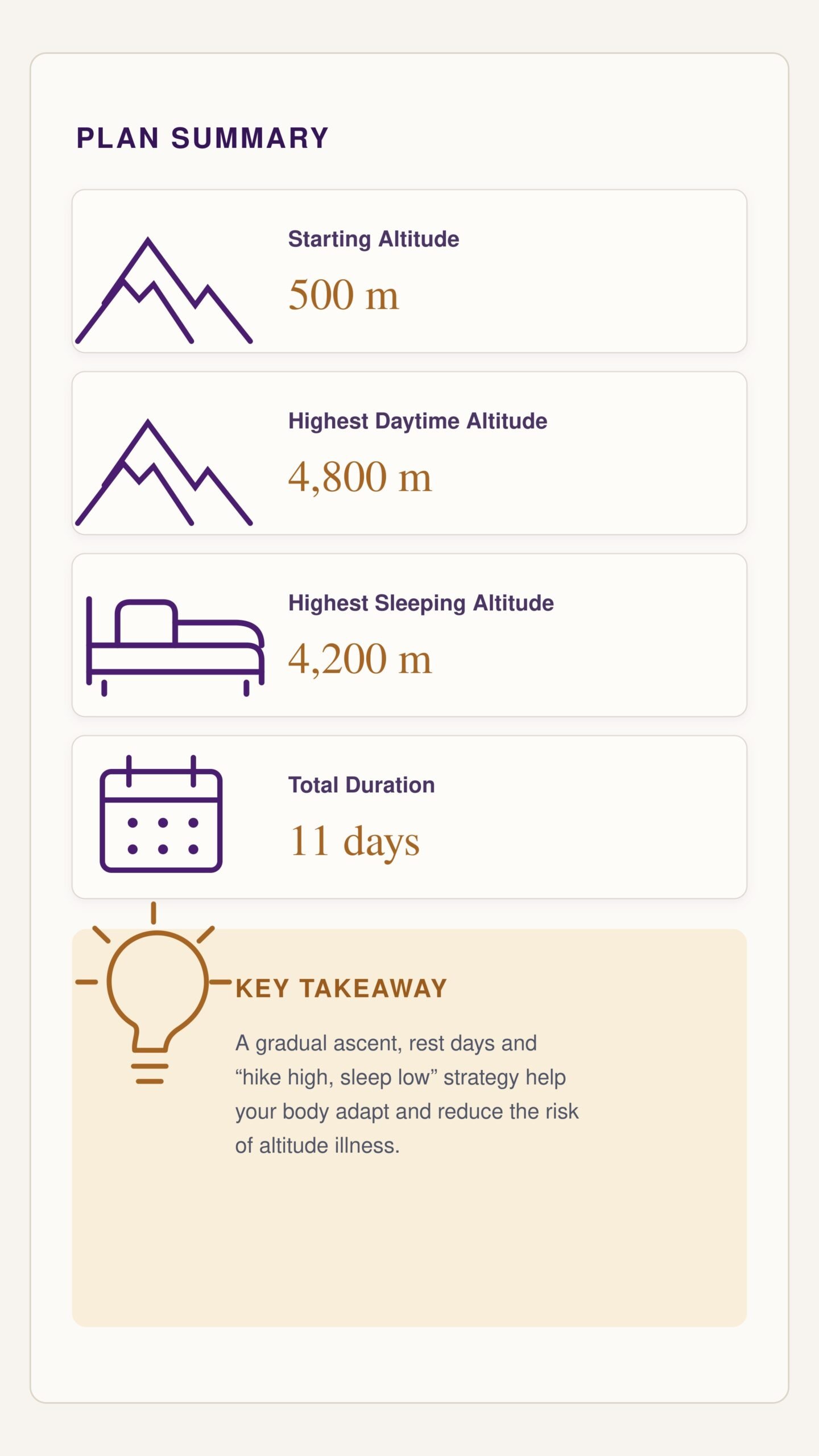
A real world example to show how the planner works. This itinerary takes you from 500m to a sleeping altitude of 4,200m, with a daytime high point of 4,800m, following safe acclimatization guidelines.

FREQUENTLY ASKED QUESTIONS
Evidence & Guidance
Our altitude acclimatization planner is built on established medical and mountaineering guidelines from leading organisations.